Clearing Foam From Mutley Roofs
Mutley is one of Plymouth’s classic terraced neighbourhoods. The streets running off Mutley Plain — Lockyer Road, Wilderness Road, Abingdon Road and their neighbours — are lined with Victorian and Edwardian terraces, many of them family homes and plenty let to students and young professionals. That mix means spray foam tends to surface in two ways: during a buyer’s survey, or when a landlord refinances a rental.
We take spray foam out of Mutley homes, and from houses right across the city. First we pin down the foam type, measure the sprayed area and read exactly what your lender, surveyor or buyer wrote. Not every installation needs to come out.
What Mutley Roofs Are Like
A Mutley terrace usually means one slate roof pitched front and back, neighbours on either side and a small square hatch above the landing. The lofts are usually shallow, so working space is limited and foam sprayed down to the eaves can be awkward to reach.
Many houses have a rear outrigger with its own lower roof. Foam is sometimes found there as well as in the main loft, and the two spaces aren’t always connected — which matters when we’re planning access.
On streets such as Abingdon Road, each bay window has its own little roof void that’s easy to forget. Foam can find its way into these too, and they’re easy to miss from the main hatch.
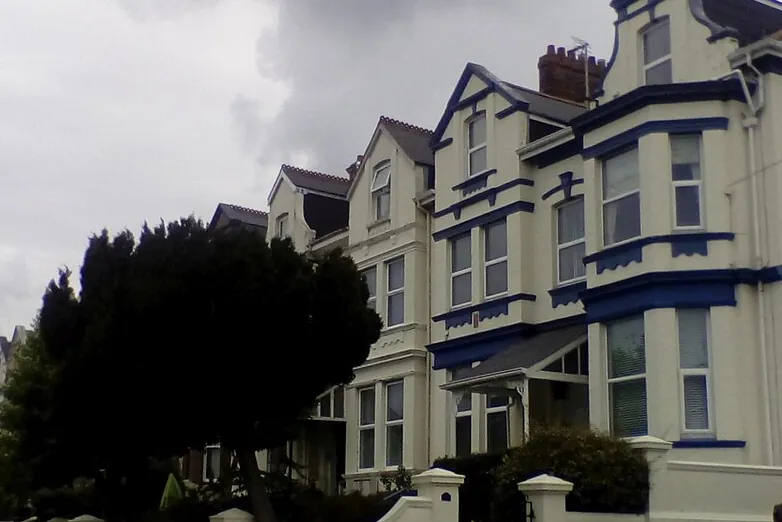
On the Ground in Mutley
Mutley Plain is the area’s spine, and most enquiries come from the grid of streets either side of it. Many houses here have been through several owners and landlords, so it’s common to find foam that nobody currently living there knew about until the survey arrived.
What Makes a Mutley Job Harder or Easier
- Small landing hatches and shallow lofts with little headroom
- Party walls on both sides and a shared roof line with neighbours
- Separate roof voids over outriggers and bays
- Tenants in occupation — access needs arranging with them
- Parked-up residential streets near Mutley Plain affecting van access
Indicative Costs in Mutley
Indicative costs
Many Mutley terraces fall within the small-to-typical part of these ranges, because the roofs are modest in size. Tight access, closed cell foam or foam in an outrigger as well as the main roof can push the price up.
- A slope, a section or a little loft£1.5k – £3k
- Both slopes of an average family house£3k – £5k
- Large roofs, rigid foam or tricky access£5k – £8k+
- Measured rate£40 – £80+ a square metre
Indicative Plymouth figures only — the fixed price comes after we’ve looked at the foam in person or through good photographs. What sets the price.
Sales, Surveys and Lenders
In Mutley, enquiries often come from landlords remortgaging a let property and from sellers whose buyer’s surveyor has flagged the loft. In both cases, ask the lender or buyer for their requirement in writing — some want removal, others want a report or photos first.
Even with the foam gone, the lender or buyer has the final word — our lenders page explains why.
Useful Links for Mutley
- RICS consumer guide to spray foam insulation — the surveying profession’s homeowner briefing on sprayed insulation.
- Plymouth City Council: conservation areas — Plymouth’s map of protected areas — useful if Mutley roof repairs will be visible.
- Plymouth City Council: building control — Plymouth’s building control team, if new roofing or insulation might need signing off.
Links open in a new window. These bodies have no connection to our business.