Clearing Foam From Stonehouse Roofs
Stonehouse has some of the oldest housing in Plymouth, from the Georgian terraces of Durnford Street to the streets around Union Street and the converted buildings near Royal William Yard. Much of it lies within the Stonehouse Peninsula and North Stonehouse conservation areas.
We take spray foam out of Stonehouse homes. In older buildings, we take particular care around original timbers and roof coverings, and we’ll photograph everything so you have a record for your lender or buyer.
What Stonehouse Roofs Are Like
Georgian and early Victorian terraces in Stonehouse often have roofs hidden behind parapets, with valley gutters and low roof spaces that are awkward to reach. Foam sprayed under these roofs can be hard to get at, and parapet gutters are exactly where surveyors look for damp.
Many larger houses have been split into flats, so the roof is shared and the loft may only be reachable through a top-floor flat or a communal hatch.
Older roof timbers can be irregular, and the felt or boarding beneath the slates may be original. Removal around them needs a steady hand.
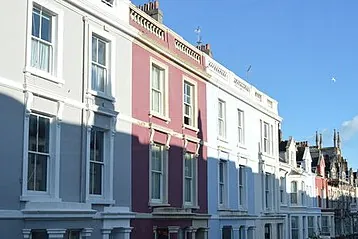
On the Ground in Stonehouse
Durnford Street and the surrounding roads have some of the city’s best-preserved Georgian fronts, while the streets nearer Union Street are more mixed. In either case, old buildings reward a careful, unhurried approach — and good photos for the file.
What Makes a Stonehouse Job Harder or Easier
- Parapet and valley roofs with limited working space
- Older, irregular timbers that need careful work
- Shared roofs and freeholder consent in converted buildings
- Conservation area streets and listed buildings
- City-centre parking and access
Indicative Costs in Stonehouse
Indicative costs
Odd-shaped, older roofs push most Stonehouse jobs into the middle or top of the table. Smaller, accessible lofts can cost less.
- A slope, a section or a little loft£1.5k – £3k
- Both slopes of an average family house£3k – £5k
- Large roofs, rigid foam or tricky access£5k – £8k+
- Measured rate£40 – £80+ a square metre
Indicative Plymouth figures only — the fixed price comes after we’ve looked at the foam in person or through good photographs. What sets the price.
Sales, Surveys and Lenders
Lenders and surveyors look closely at older properties, and spray foam in a Georgian or Victorian roof often prompts questions about timber condition. Get the lender’s or buyer’s requirement in writing, and if the building is listed, check with the council before any external repairs.
Even with the foam gone, the lender or buyer has the final word — our lenders page explains why.
Useful Links for Stonehouse
- RICS consumer guide to spray foam insulation — the surveying profession’s homeowner briefing on sprayed insulation.
- Plymouth City Council: conservation areas — Stonehouse Peninsula and North Stonehouse is protected, so look here before anything changes on the outside of the roof.
- Plymouth City Council: building control — Plymouth’s building control team, if new roofing or insulation might need signing off.
- Historic England: search the National Heritage List — see if the property is listed before planning repairs.
Links open in a new window. These bodies have no connection to our business.