Clearing Foam From St Judes Roofs
St Judes sits just east of the city centre, a tight grid of Victorian terraced streets running down towards Beaumont Park and Tothill. It’s popular with first-time buyers and landlords, which means plenty of sales, plenty of surveys — and spray foam coming to light when a buyer’s surveyor puts their head through the hatch.
Where a St Judes survey or valuation has mentioned foam, we can confirm what’s in the roof and quote for removal where it’s genuinely needed, along with the photos a lender or buyer may ask for afterwards.
What St Judes Roofs Are Like
Most houses in St Judes are two-storey terraces with a pitched slate roof and a small loft. Some streets have bay fronts; others are flat-fronted. Lofts are compact, so even a fully sprayed roof is a manageable area — but the working conditions are cramped.
A fair number of the larger terraces have been converted into flats. In those, the loft usually belongs to the top-floor flat or to the freeholder, and the hatch may be in a communal hallway or inside the top flat.
Rear outriggers with their own small roofs are common, and some have been extended with flat-roofed rear additions where foam may also have been applied.
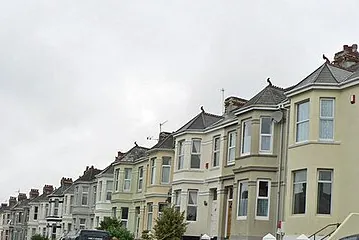
On the Ground in St Judes
St Judes’ streets are close-packed and mostly two-storey, so the van usually parks a short walk away. Jobs here are typically compact and quick, and the main planning point is protecting narrow stairs and landings on the way up to the hatch.
What Makes a St Judes Job Harder or Easier
- Compact lofts with small hatches and limited headroom
- Flats where the roof is shared or owned by a freeholder
- Outrigger and rear extension roofs as well as the main loft
- Narrow, well-parked streets for van access and waste removal
- Stairs and landings to protect on the way to the loft
Indicative Costs in St Judes
Indicative costs
St Judes terraces often sit towards the lower end of these ranges because the roofs are small. Flats with communal access, closed cell foam or foam across several roof sections can cost more.
- A slope, a section or a little loft£1.5k – £3k
- Both slopes of an average family house£3k – £5k
- Large roofs, rigid foam or tricky access£5k – £8k+
- Measured rate£40 – £80+ a square metre
Indicative Plymouth figures only — the fixed price comes after we’ve looked at the foam in person or through good photographs. What sets the price.
Sales, Surveys and Lenders
When a St Judes sale hits a foam comment in the survey, get the wording from your agent and pin down whether the buyer wants it out, a report on it, or money off. For a top-floor flat, check your lease and speak to the freeholder before booking any work.
Even with the foam gone, the lender or buyer has the final word — our lenders page explains why.
Useful Links for St Judes
- RICS consumer guide to spray foam insulation — the surveying profession’s homeowner briefing on sprayed insulation.
- Plymouth City Council: conservation areas — Plymouth’s map of protected areas — useful if St Judes roof repairs will be visible.
- Plymouth City Council: building control — Plymouth’s building control team, if new roofing or insulation might need signing off.
Links open in a new window. These bodies have no connection to our business.